
Introduction
Water is the driving force of all nature. Everybody has the right to access clean water since it is the basis of life. Ecological balance, economic growth, and survival all depend on water. India has 16% of the world's population but only 4% of its total water resources, which causes water scarcity in many areas. (K). India, a densely populated developing country, faces a serious water shortage. (H). Rapid population growth, industrialisation, urbanisation, and climate change have made water scarcity and pollution worse globally. Uneven geographic distribution and reliance on seasonal rainfall exacerbate these issues in India. Ancient Indian civilisations developed sophisticated water management systems, including stepwells, reservoirs, and natural purification methods, that ensured sustainability for centuries. Modern technologies like satellite-based monitoring, advanced treatment techniques, and smart irrigation can help effectively address today's crisis. However, given the increasing complexity of water-related issues, integrated strategies that balance policy, technology, and tradition are required. This paper examines past and present methods, emphasising their applicability to the current global water crisis, and offers solutions for environmentally sound, socially inclusive, and climate-resilient water management in the twenty-first century.
The Urgency of Water Management: Addressing Scarcity, Pollution, and Future Risks
Water is a limited but essential resource for human health, food security, ecosystems and economic development. Surface and groundwater resources are under systematic stress as a result of population growth, agricultural expansion, industrialisation, and urbanisation. To maintain long-term water security, balance conflicting uses, and preserve water quality, effective water management is essential. Water makes up 71% of the Earth's total area, which is 1,386 million km³. Only 2.5% of it is fresh water, and even then, access to it is limited.
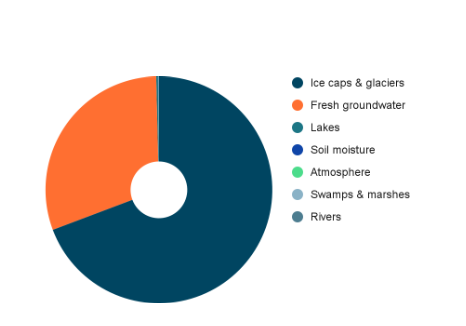
Figure 1: Distribution of fresh water available on the earth.
The water crisis — causes, drivers and effects
Dr APJ Abdul Kalam said, “Future wars will be over water.” He emphasised the urgent need to manage and distribute water resources wisely and warned of growing conflicts over water scarcity. Population growth, rising per capita consumption from urbanisation, rising living standards, and increased food production are the main causes of water scarcity. Groundwater extraction for farms and cities surpasses natural recharge in many areas. (a) Sewage, industrial waste, and pesticide pollution deteriorate water quality, endangering biodiversity and rendering it unfit for human consumption. Due to their slow and expensive cleanup, contaminants such as nitrates, arsenic, fluoride, heavy metals, and organic pollutants pose long-term health risks. Poor regulation, disjointed institutions, and a lack of coordination between surface and groundwater management exacerbate the situation. (f) (p)
(h) (Bhat 2014)
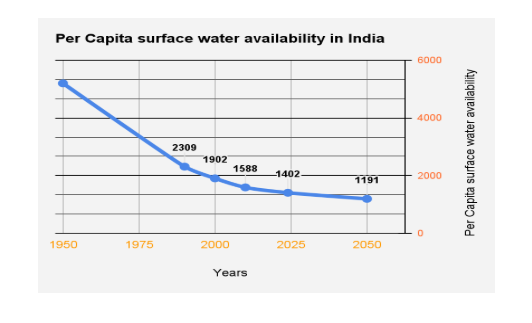
Figure 1: Surface water availability per capita in India since 1950.
As per ‘Our World in Data’ reports, India's per capita renewable freshwater resources decreased from 1366 m³ in 2000 to 1022 m³ in 2021.

Figure 2: Renewable freshwater resources per person, 2021 (u)
Deforestation, wetland loss, and poor floodplain management increase flood intensity and damage. Prolonged rainfall deficits and mismanaged reserves trigger droughts, causing crop loss, hydropower decline, and drinking water shortages. Floods contaminate supplies, while droughts concentrate pollutants in water. (h)
Water scarcity — global and India focus
A large number of river basins around the world are categorised as water-stressed; scarcity is seasonal and uneven in space. Water consumption is still highest in agriculture, and urban demands concentrate pressures close to cities. The rate of groundwater storage depletion is estimated to be between 100 and 200 km³ per year, or 15-25% of total groundwater withdrawals (c).
India faces severe groundwater overexploitation, high seasonal variability, and competition between urban and agricultural demands. According to NCIWRD, irrigation will account for 72.48% of total water use in 2025 due to high demand. The country’s area equipped for irrigation (AEI) reached 70 Mha in 2015, an increase of 8.5 Mha since 2000. Rapid urbanisation and inadequate wastewater treatment further intensify water shortages. (b) (o) (y)
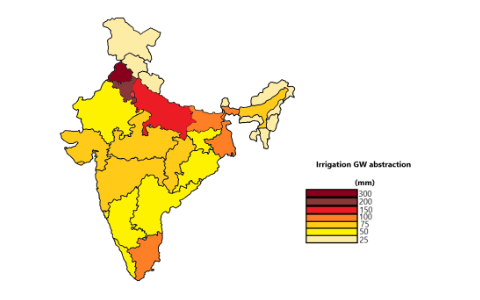
Demand management, pollution control, nature-based solutions, monitoring, institutional coordination, and the long-term sustainability of groundwater and surface water all depend on integrated water management planning.
Vedic Water Wisdom and Indigenous Technologies for Sustainable Management
India's history and culture are deeply ingrained in its water management tradition. Water was regarded as apah, a sacred source of prosperity and purity, during the Vedic era. Water bodies should be conserved, distributed fairly, and protected, according to ancient writings like the Rigveda ® (R2) and Atharvaveda (A) (a2), as well as more recent works like the Arthashastra (a) and Manusmriti (m). Early communities used divergent canals and rivers like the Saraswati and Sindhu for irrigation, with settlements designed to capture and store monsoon water.
India has been creating specialised technologies to manage surface and groundwater sustainably for centuries. Using wheels, ropes, and pulleys, water was raised from hand-dug wells lined with stone or brick to tap shallow aquifers. Stepwells (baodis) were water storage systems and social hubs that combined design and utility. Man-made tanks such as kunds and johads stored monsoon runoff for drinking, irrigation, and livestock, often connected to canals for regulated release. Community-managed ponds supported agriculture, fishing, and bathing, with overflow channels to prevent flooding. (j) Wells are naturally recharged by systems such as tanks and ponds. Community-led maintenance ensured sustainability. Festivals and religious rites promote reverence for bodies of water. Traditional methods are inexpensive, eco-friendly, and naturally sustainable. In particular, in areas that are prone to drought or groundwater stress, we should adapt to modern technologies.

https://doi.org/10.1029/2018EF000939
Modern Engineering Solutions for Surface Water Management in India
India's diverse terrain necessitates creative surface water management. While lowering the risk of disaster, modern engineering projects use rivers and rainfall for domestic, industrial, and agricultural purposes. These extensive intrusions show a dedication to water security, but they also need to be managed fairly and sustainably.
Large Dams and Reservoirs
Large dams such as Bhakra Nangal and Tehri symbolise India’s development goals; irrigating millions of hectares, generating clean hydroelectric power for rural and industrial growth, and mitigating monsoon flood risks through regulated river flows. However, this project includes social and environmental institutions, such as the loss of biodiversity and the displacement of sediment stations, modern engineering that addresses the environment, slow fish passage, and resettlement policies.
Canal Networks and Irrigation Projects
Reservoirs supply water to canals such as the Sardar Sarovar Project and the Indira Gandhi Canal, which transport water over great distances, even into the Thar Desert, to support livelihoods and crops. These systems improve food security, farmer incomes, and access to markets, healthcare, and education, but they also have an impact on soil salinity. (IGC)
River Interlinking Projects
The Ken–Betwa link, a key river interlinking effort, aims to balance water distribution, enhance irrigation and drinking supplies, and curb drought. It includes small hydropower plants and flood moderation measures. Plans emphasise ecosystem-based management to ensure sustainability and reduce environmental impacts. (Ken)
Modern Groundwater Management and Conservation Techniques
India's drinking water and agriculture depend on groundwater, but this resource is in jeopardy because of an imbalance between natural discharge and extraction. Over 60 % of irrigated agriculture and about 85 % of drinking water supplies in India rely on groundwater. (1) (2) Modern methods use science and technology to preserve and sustainably treat aquifers and human health.
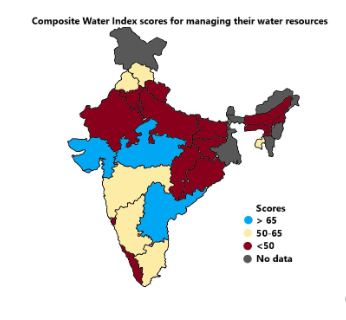
(N)
Figure: Indian states' composite water index scores for water resource management.
Managed Aquifer Recharge (MAR) and Recharge Wells
MAR uses surface water or treated wastewater to artificially replenish groundwater in aquifers. Water percolates directly from injection wells, trenches, and rechargeable wells. It addresses the declining groundwater levels in our exploited region. Preserve monsoon water and lessen the effects of drought. MAR filters contaminants out of the soil layers, improving the quality of the water. Cutting-edge techniques like smart sensors and nanofiltration track recharge efficiency in real time. (k) (I) (j)
Tube Wells and Borewells with Regulation
Although borewells and tube wells provide drinking and irrigation water, excessive use has resulted in contamination and depletion. Low-energy solar pumps, community-based groundwater associations, and strict drilling regulations can all support sustainable extraction.

http://dx.doi.org/10.18520/cs/v121/i5/641-650
3. Groundwater Monitoring with IoT Sensors
Internet of Things (IoT)-enabled sensors are transforming groundwater management by tracking water table fluctuations and enabling timely action to prevent overextraction. They also detect contamination early, safeguarding public health. Networks of sensors in high-risk areas, linked to mobile apps and centralised platforms, provide real-time monitoring and response. (lk)
4. Artificial Recharge Basins and Percolation Tanks
Recharge basins and conventional percolation tanks are being updated. Rainfall is collected and stored for ground infiltration. Stop surface water waste and soil erosion. Replenish nearby groundwater for borewells and tubewells. In the new design, soil filtration, sediment control, and vegetation integration improve ecosystem health and recharge efficiency. (d)
Ancient Wisdom and Modern Science in Chemical Water Treatment
Chemical interventions have long been used to purify water, progressing from natural coagulants to sophisticated industrial processes. Ancient Indian techniques included boiling, coagulation with alum (sphatika), natural filtration with Nirmali seeds (Strychnos potatorum), and disinfection with sunlight. Pathogens were frequently killed by boiling and immersing heated metals, while storage in vessels made of porous clays guaranteed cooling and minimal filtration through evaporative processes. (t) (f) (d)
Modern chemical treatment of water is highly advanced and standardised. India is projected to have a water treatment chemicals market worth US$1,435 million by 2030, up from US$1,058 million in 2024. The most popular disinfection technique is still chlorination, but alternatives like ozonation and UV irradiation don't change the taste or smell. Ferric chloride and aluminium sulphate are coagulants that help with sedimentation, and activated carbon enhances flavour by eliminating organic compounds. These techniques guarantee safe urban and industrial water supplies when paired with stringent monitoring. Just 0.5% of households used alum, according to the NFHS-4, whereas 16% used cloth filtration and 12% relied on boiling.

Integrating Technology, Nature, and Policy for Sustainable Water Futures
Combining cutting-edge technology with climate-resilient tactics that strike a balance between immediate demands and long-term sustainability is essential to India's water future. Disaster preparedness, transparency, and resource allocation can all be enhanced by technologies like GIS, satellite hydrology, AI-based modelling, and blockchain governance. IWRM must incorporate nature-based solutions like floodplain protection and wetland restoration with efficient techniques like desalination, wastewater recycling, and smart irrigation to increase recharge, quality, and resilience.
The urgency is increased by climate change, as freshwater security is threatened by sea level rise, glacial melt, and changing monsoons. Adaptive strategies—risk-informed urban planning, seasonal demand management, and flexible reservoir operations—supported by policy reforms, insurance tools, and climate forecasting, are essential.
Long-term success requires interdisciplinary collaboration, capacity building, and integrated monitoring to address data gaps. By combining technology, ecosystem stewardship, and participatory governance, India can transform scarcity into resilience, securing water for people, ecosystems, and economic growth.
Conclusion
Water security's future depends on combining traditional knowledge with contemporary invention. While modern technologies like GIS mapping, desalination, wastewater reuse, and AI-based forecasting allow for precise and extensive interventions, traditional Indian water systems show how locally tailored, environmentally friendly solutions can last for centuries. However, technology alone cannot solve the crisis. Water management needs to be combined with community involvement, policy changes, and climate adaptation tactics to guarantee fair access and environmental sustainability. Modern engineering, participatory governance, and nature-based solutions can work together to turn scarcity into resilience. India and the rest of the world can ensure a water future that promotes ecological integrity and human well-being by taking lessons from the past and utilising the resources of the present. This paper emphasises that sustainable water management is a shared societal responsibility as well as a technical challenge.