“The answers to our biggest environmental problems may be growing quietly beneath our feet.”
— Dr. Paul Stamets, Mycologist and fungi researcher
🙏 Namaste doston,
You and I both know the feeling.
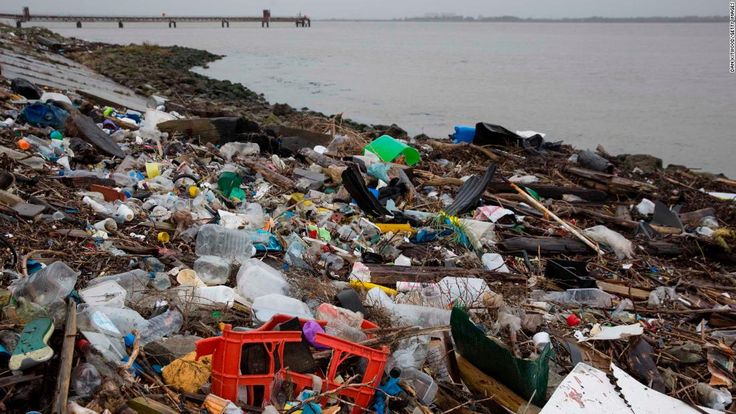
Plastic is everywhere — in the oceans, the soil, our cities, the rain… even inside our bodies. It’s one of those problems that feels too big, too tangled, and too late to fix.
We use plastic daily — it’s in the packaging we open, the clothes we wear, and the things we sit on, touch, and even breathe.
But what happens after we throw it “away”?
The truth is — most of it never really goes away.
Now here’s a thought.
What if the solution to this mess wasn’t a fancy machine or a billion-dollar invention?
What if it was already growing quietly in the heart of the Amazon rainforest?
This isn’t science fiction.
This is science doing what it does best—listening to nature.
Researchers from Yale University went on a student expedition to Ecuador. They weren’t expecting to find a global breakthrough. But that’s where they discovered a quiet little organism — a species of fungus called Pestalotiopsis microspora — that doesn’t just survive in plastic…
It eats it.
Yes, this humble fungus can digest polyurethane — one of the toughest, most stubborn plastics around — and turn it into simple, harmless organic compounds.
And guess what?
It doesn’t need sunlight.
It doesn’t even need oxygen.
It can do this deep underground — in the places where most plastic ends up, forgotten and untouched.
Sounds unreal, right?
But it’s not.
This discovery may change everything we thought we knew about waste, nature, and the potential of life.
So… how does this quiet, forest-dwelling fungus pull off the impossible?
Let’s walk together through the jungle floor and get to know this little eco-warrior.
Say Hello to the Fungus: Pestalotiopsis microspora
Let’s be honest — it doesn’t look like much.
It won’t catch your eye. It doesn’t glow in the dark or grow to the size of a tree.
No cape, no theme music, no drama.
Just a small, brownish-white fungal patch, nestled on decaying leaves or tree bark in the damp rainforest.
But inside this unassuming form is a power that has stunned scientists:
It can break down polyurethane, the synthetic material found in everything from foam furniture and insulation to shoe soles and surfboards.
This is the kind of plastic that resists time — the kind that can sit in landfills for hundreds of years without breaking down.
Now here comes the mind-blowing part:
This fungus doesn’t just touch the plastic.
It doesn’t just weaken it.
It eats it.
It can use plastic as its sole source of carbon, meaning it treats plastic as food.
It doesn’t need any fancy nutrients, rich soil, or light. Just the very thing we’ve all been struggling to get rid of — and it thrives.
Even more impressive?
This digestion process occurs even in anaerobic conditions — areas with no oxygen, such as the deep, compacted layers of our landfills. That’s where most plastics end up, untouched, for centuries.
But this little lifeform doesn’t care.
It just gets to work.
Imagine that, in places where almost nothing can survive, this fungus is quietly eating away at plastic, molecule by molecule.
Let that sink in.
Maybe we’re not fighting this plastic battle alone after all.
Why This Discovery Could Change Everything
Let’s pause and zoom out for a second.
Plastic is woven into our daily lives.
It’s cheap. It’s useful.
But it was never meant to stay forever.
Yet most of it does.
It doesn’t rot like food.
It doesn’t rust like metal.
It breaks down slowly, but not into nothing. Instead, it crumbles into microplastics, which float through our air, our oceans, and our bloodstreams.
Most of the plastic we’ve ever produced is still out there—somewhere.
The options we’ve had so far? Not great.
Recycling? Often inefficient, especially for mixed plastics like polyurethane.
Burning? Creates toxic fumes and contributes to climate change.
Landfills? Just long-term storage.
But this humble fungus?
It opens a door to something radically different.
Imagine a world where landfills aren’t just waste graveyards—but living ecosystems.
Imagine bioreactors or composting systems where fungi are quietly munching away at plastics, leaving behind nothing toxic. No microplastics. No greenhouse gases. Just soft, earthy matter.
It sounds futuristic, right?
But it's already happening — in the lab, in the forest — at a microscopic level.
And that’s why this matters.
If Pestalotiopsis microspora can do this…
What else can fungi do?
What other organisms have evolved powers we haven’t noticed yet?
Maybe, just maybe, we’ve been trying too hard to outsmart nature…
When we should have been learning from it.
How Does It Work? The Enzyme Magic
Let’s get a little geeky for a second — but in a fun way 😄
Inside Pestalotiopsis microspora, there are tiny biochemical tools called enzymes. Think of them as biological scissors.
These enzymes have the unique ability to snip apart the tough chemical bonds that hold polyurethane together.
Polyurethane is a synthetic polymer — that means it’s made by humans, and it’s not something nature evolved to deal with.
That’s why most microbes ignore it.
But this fungus? It figured out how to treat it like food.
Once the enzymes start working, the plastic begins to break down into smaller compounds. Eventually, the fungus absorbs these compounds and uses them as energy.
And all of this happens:
Without sunlight
Without oxygen
Without extra nutrients
It’s like finding out a living being can digest concrete — and turn it into compost. Wild, right?
But this is real.
And it opens the door to a whole new kind of biology — one that helps us heal the planet instead of harming it.
Can This Fungus Be Used in the Real World?
Now, here’s the honest part.
We’re not there yet.
Right now, Pestalotiopsis microspora is a lab marvel, a scientific breakthrough — but it’s not quite ready for industrial-level cleanup.
Why?
Well, fungi grow slowly.
They need the right conditions.
And extracting enzymes at scale isn’t cheap or easy, yet.
But the momentum has started.
Scientists are now working to:
Optimise growth conditions to make the fungus reproduce faster
Extract the plastic-eating enzymes for use in liquid bioreactors.
Explore mixing these enzymes into composting systems or even the landfill liner.
Investigate other fungi and microbes with similar abilities.
And here’s the most exciting part:
This discovery has opened the floodgates for a whole new field of research.
Because if one humble fungus can eat plastic…
Who knows what else is out there?
Conclusion — A Quiet Hero in the Forest
In a world filled with headlines, panic, and pollution…
Here’s a story that whispers instead of shouts.
A small, simple organism.
Tucked away under wet leaves in the Amazon.
Doing something we thought was impossible.
Pestalotiopsis microspora won’t save the planet on its own.
But it gives us something we desperately need:
Hope.
It’s a reminder that nature is not just a victim in this story — it’s also a partner.
A teacher.
A quiet innovator that’s been solving problems for billions of years, long before we showed up with our plastic bags and packaging foam.
So maybe, just maybe…
The future of cleaning up the planet won’t be built by us alone.
It will be co-authored with fungi, forests, and all the life that’s still listening beneath our feet.
Did You Know?
🧫 Pestalotiopsis microspora was discovered in the Amazon in 2011, not by a global expedition, but by undergraduate Yale students on a field trip.
♻️ It can survive entirely on polyurethane (one of the toughest plastics), even in anaerobic (oxygen-free) environments like deep landfills.
🌍 It’s one of the only known organisms that breaks down plastic without leaving behind harmful microplastics—transforming it into organic matter that's safe for nature.